Why 10 Years of Building Systems Matters More Now
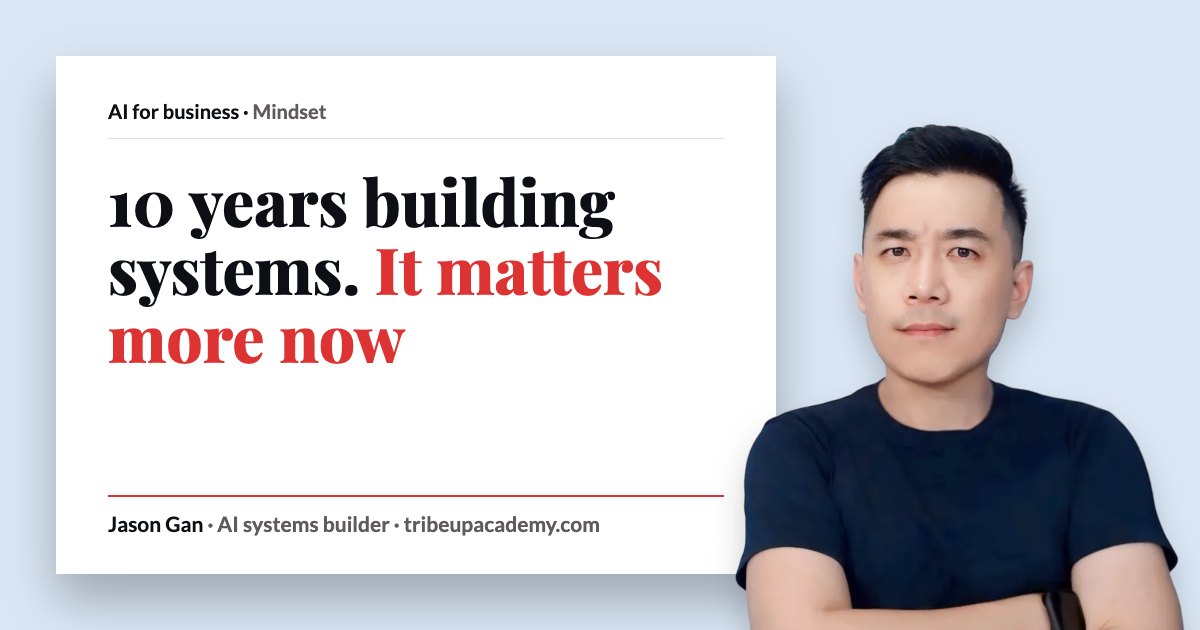
From 2010 to 2020 I ran a digital agency. We built websites, apps and web systems for clients, with a team of up to 10 or 11 people at one point, including programmers.
Back then, the technology was always the hard part. Understanding what a client needed came easily to me. Getting it built, on time and on budget, was the struggle. AI has flipped that. Building is now fast and cheap. Knowing what to build, and how the pieces fit together, is the part that’s still hard. That’s why ten years of designing systems matters more now.
What we built at the agency
Over those ten years my agency built over 100 websites. We also built Facebook apps, mobile apps, a property listing system, marketing web systems, internal tools for clients, and our own e-commerce system.
I wasn’t the one writing the code. I designed how each system worked: the flow, the logic, what the user sees, what happens when they click. Then the team built it.
Every project started the same way. Sit down with the client, understand how their business runs, find the real problem, then design something that fits.
Why technology was the hard part
Here’s the thing. I could usually see what a client needed within the first meeting. It’s always been my gift. The pain came after.
- Every feature cost programmer time. A good idea could take weeks to build.
- Tools had limits. Things that are simple today needed custom work back then.
- Changes were expensive. If a client changed their mind halfway, we paid for it in time and money.
- People left. When a programmer left, their knowledge often left with them.
So we often built a smaller version of the right idea, because the full version cost too much.
See how I build AI marketing systems for businesses →
Real systems built around one business problem, with you or for you, and it always starts with a free 20-minute call.
What AI changed
AI removed most of that limit. Things that took my team weeks, I can now build with AI in days, sometimes hours. I rebuilt my own website in about two days. My discovery call follow-up system and my outreach system were built the same way.
That was the moment it clicked for me. AI’s real potential is building tools and automations, and that’s what I’ve been doing my whole career.
Why the experience matters more now
When building is cheap, everyone builds. People ask AI for an app, accept whatever comes out, and call it done. It looks great in a demo.
Then real life happens. A form sends leads to the wrong place. An email goes out twice. Nobody knows how the thing works, so nobody can fix it.
Put it this way. AI can lay bricks very fast. Someone still has to know where the walls go. A working business system has to connect your forms, emails, CRM, payments and follow-up, and it has to keep working when something unexpected happens. That’s design, and it comes from building many systems and watching some of them break.
Let’s say, for example, you want an AI to reply to new leads. Before building anything, I’d want to know where leads come from, what they need to hear first, what happens if they reply at midnight, who takes over, and how you’ll know it’s working. Those questions come from experience. They’re also what decides whether the system makes you money.
A story I keep seeing
I recently spoke to a business owner who had a lead management system on his website, feeding leads into his CRM. The developer who built it left. Nobody could take the project over, because nobody understood how it was put together.
That used to be a dead end. Today, someone who understands systems can map out what it does, design it properly, and rebuild it with AI, often better connected than before. The building is the easy part now. Understanding the business and designing the system is the work.
A quick self-check
- Do you know how the systems in your business connect to each other?
- If the person who built your tools left tomorrow, could someone else fix them?
- Did you design your last AI build before building it, or just ask and accept?
- What happens in your system when something goes wrong?
- Is the problem you’re building for the real one?
If these are hard to answer, the next step is design, before more building.
Frequently asked questions
Do I still need technical experience to build with AI?
You don’t need to write code anymore. You do need to understand how your business systems fit together, like forms, emails, CRM, payments and follow-up. That understanding decides whether what AI builds keeps working in real life.
Why do AI-built tools break?
Often because they were built without a design. Someone asked for a result, accepted what came out, and never decided how it should handle real situations, like duplicate leads or failed payments. It works in a demo and breaks under daily use.
What should I do if the developer who built my system has left?
Start by mapping what the system does today: where data comes in, where it goes, and who uses it. With that map, the system can be redesigned and rebuilt with AI, often more connected than before. Don’t try to fix it blind.
Is it worth hiring someone to design an AI system for my business?
It depends on what it handles. For a simple personal task, probably not. For anything that touches your leads, customers or money, a design step before the build is usually cheaper than fixing a broken system later.
Want a system designed for your business?
If you have a problem you’d like AI to handle, or a system nobody understands anymore, book a free 20-minute call with me. Just me, no sales team, no obligations. We’ll talk about how your business runs and what’s worth building.
This is part of my AI journey series. Next: How I rebuilt my business website in 2 days with AI.
Written by Jason Gan. Jason designed software systems for clients from 2010 to 2020 and has run Meta ads since 2010, coaching 6,000+ advertisers across 50+ countries. He now builds marketing systems with AI. Watch him on his YouTube channel.